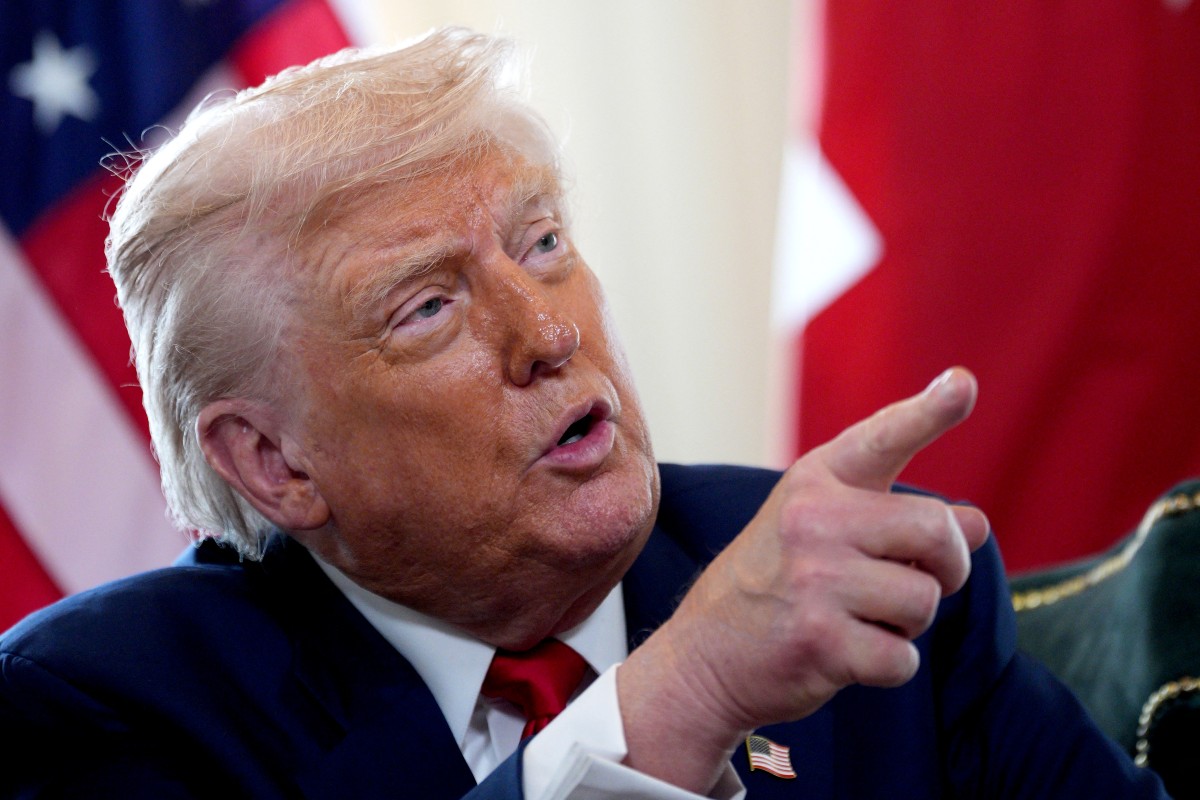

Donald Trump said on Monday that the U.S.-Iran ceasefire was on “life support” after rejecting Tehran’s latest proposal for failing to include concessions on its nuclear programme, while insisting he was still seeking “complete victory” in the conflict.
“We’re going to have a complete victory,” Trump told reporters at the White House, dismissing suggestions that mounting pressure could force Washington into compromise. He said Iran believed he would “get tired of this” but added “there’s no pressure.”
The remarks signalled growing uncertainty around diplomatic efforts to contain a conflict that has disrupted shipping through the Strait of Hormuz, pushed oil prices higher and intensified fears of a broader humanitarian and economic crisis across multiple regions.
Iran’s latest response to Washington reportedly demanded an end to the war and the release of Iranian assets, while warning against further U.S. military escalation or additional foreign naval deployments in Hormuz.
Shipping crisis deepens
The ongoing conflict has continued to paralyse maritime trade through the Strait of Hormuz, one of the world’s most critical energy corridors.
Trump said he would reduce the federal gas tax to offset rising fuel prices caused by the disruption, as the 10-week conflict continued to affect global oil flows.
Saudi Aramco CEO Amin Nasser said the company could raise production capacity to 12 million barrels per day within three weeks if necessary, but warned that prolonged shipping disruptions could prevent oil markets from stabilising until 2027.
The United Nations also warned that fertiliser blockades through Hormuz could trigger a humanitarian crisis within weeks. Jorge Moreira da Silva, executive director of the UN Office for Project Services, said tens of millions of people could face hunger if supply routes remained blocked.
Meanwhile, Britain announced sanctions against 12 individuals and entities linked to Iran over alleged hostile activities, including plotting attacks and providing financial support to destabilising groups.
Diplomatic activity intensifies
Governments across Europe and Asia moved to respond to the escalating crisis.
Britain and France prepared defence discussions focused on securing shipping routes through Hormuz, while Lithuania proposed sending military personnel to support U.S. operations in the region.
In India, Narendra Modi was scheduled to begin a five-nation tour including the UAE and several European countries amid concerns over rising oil prices and pressure on India’s foreign currency reserves.
At the same time, Qatar continued limited LNG shipments through Hormuz under arrangements involving Iran and Pakistan, highlighting attempts to maintain critical energy flows despite growing security risks.
Tensions spread across region
Regional instability also intensified in Lebanon and Israel.
Lebanese leaders urged the U.S. ambassador in Beirut to pressure Israel to halt ongoing strikes despite a ceasefire agreement between Israel and Hezbollah that took effect in April.
Lebanese authorities said Israeli attacks since March 2 had killed 2,869 people, including dozens after the ceasefire began.
Separately, the Israeli military sentenced two soldiers to prison after one was photographed placing a cigarette in the mouth of a Virgin Mary statue in southern Lebanon, an incident the military said violated its values.
Elsewhere, Amnesty International called for Israel’s exclusion from the Eurovision Song Contest over what it described as “apartheid against Palestinians.”
In Iran, authorities seized properties linked to former football captain Ali Karimi, an exiled critic of the Islamic Republic who has supported anti-government protests and opposition movements online.