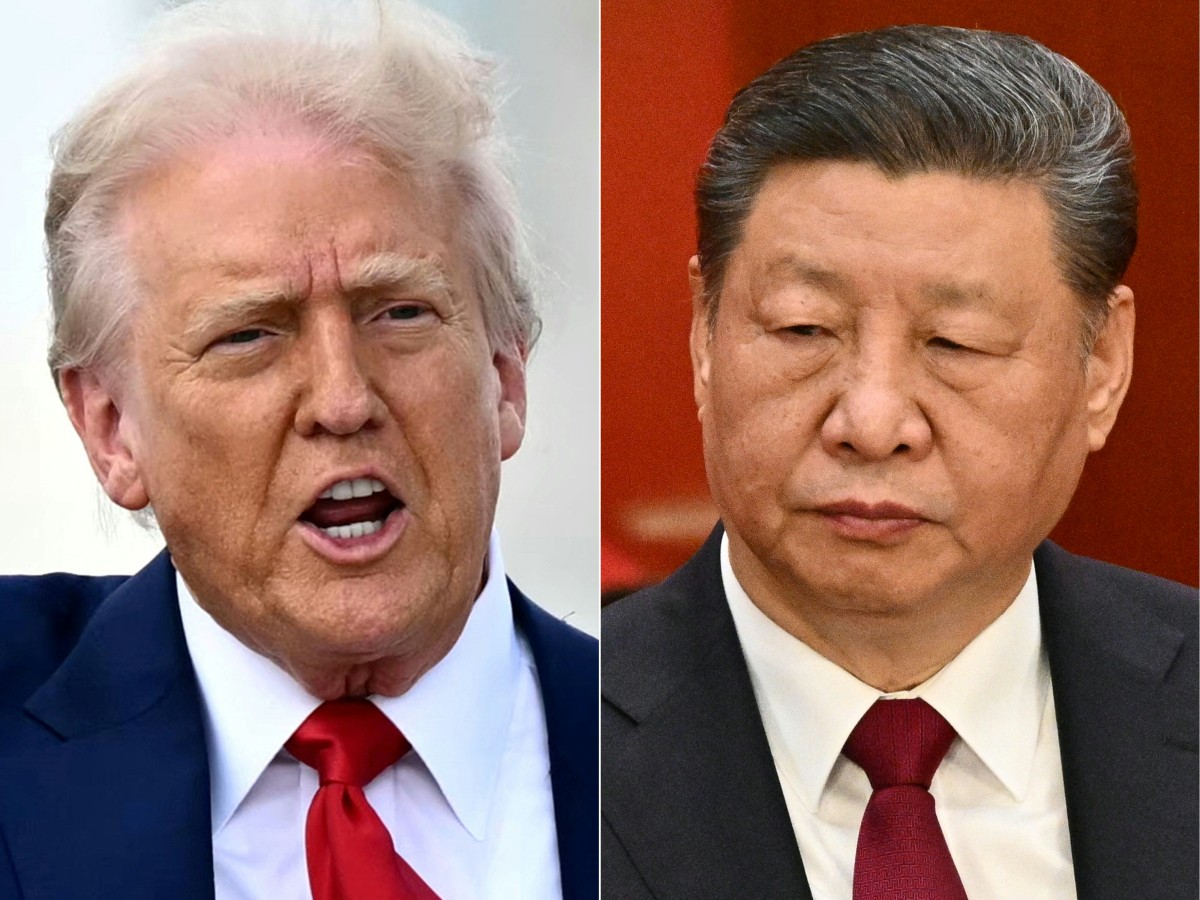

US President Donald Trump said Chinese President Xi Jinping wants the Strait of Hormuz reopened, following talks between the two leaders in Beijing that focused heavily on the Iran conflict and disruptions to global energy supplies.
Speaking to Fox News after the meeting, Trump said both leaders agreed that the strategically important shipping route should remain open as tensions in the Gulf continue to impact oil markets worldwide.
“He’d like to see the Hormuz Strait open,” Trump said of Xi. “He said if I can be of any help whatsoever, I would like to help.”
Before the Iran conflict erupted in late February, nearly 20 per cent of the world’s oil passed through the Strait of Hormuz. Continued disruptions have pushed crude oil prices higher and raised concerns over a possible global economic slowdown.
Trump also said Xi opposed proposals to impose tolls on ships passing through the strait. According to Trump, the Chinese leader expressed interest in China buying more American oil in the future to reduce dependence on Gulf energy supplies.
The Iran conflict dominated the two-hour meeting between the two leaders at the Great Hall of the People, despite Trump previously downplaying the issue before departing for Beijing.
US secretary of state Marco Rubio had earlier said Washington would encourage Beijing to use its influence with Tehran to help end the conflict.
“Economies are melting down because of this crisis,” Rubio said, warning that prolonged instability would eventually affect Chinese exports as well.
China has publicly criticised US and Israeli strikes on Iran, although analysts believe Beijing has significant leverage as Iran’s largest trading partner.
Despite ongoing disagreements over Iran, Taiwan and trade, Trump described US-China relations as improving.
In a post on Truth Social, Trump claimed Xi congratulated him on his administration’s “tremendous successes” and said Xi’s earlier remarks describing the US as a “declining nation” were aimed at former President Joe Biden rather than the current administration.
“Two years ago, we were, in fact, a Nation in decline,” Trump wrote. “But now, the United States is the hottest Nation anywhere in the world.”
Xi also hosted Trump at Zhongnanhai, the Chinese leadership compound typically reserved for special diplomatic engagements, a move seen by observers as a personal gesture towards the US president.
Taiwan also remained a sensitive issue during the summit. According to AP, Xi privately warned Trump that mishandling the Taiwan issue could push the two countries towards “clashes and even conflicts.”
Rubio later said US policy on Taiwan remained “unchanged” and warned it would be “a terrible mistake” for China to attempt to take the self-ruled island by force.
The two leaders also discussed possible trade agreements, including increased Chinese purchases of US agricultural products and Boeing aircraft, as both countries looked to ease economic tensions amid broader geopolitical uncertainty.