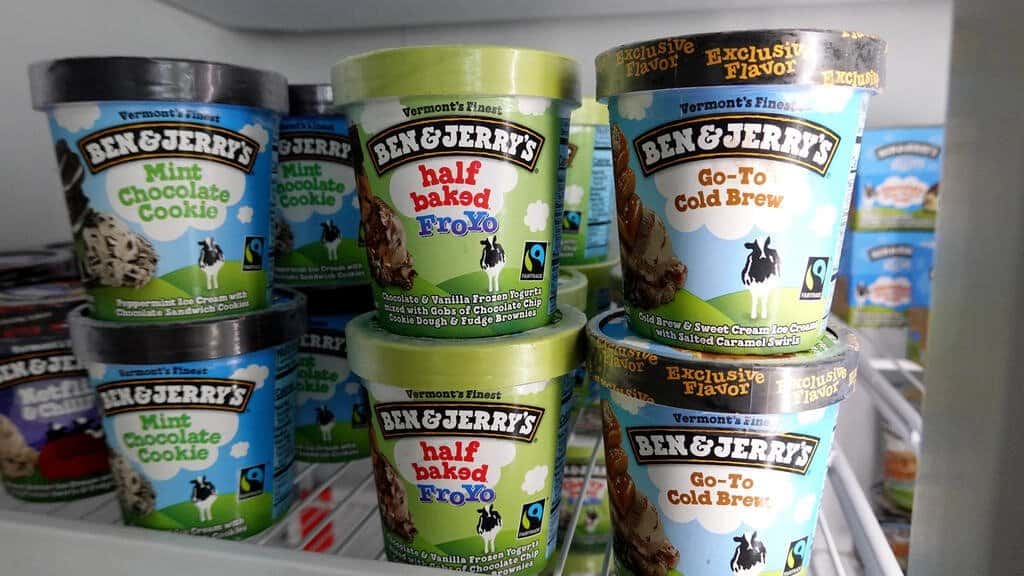

Ben & Jerry’s lost its bid Monday to block its parent company Unilever from selling its ice cream in West Bank settlements, which the US firm said would run counter to its values.
The company, known for its political activism, took the unusual step seeking an injunction after London-based Unilever announced it had sold its interest in the ice cream to an Israeli license-holder.
However, a US federal judge ruled Monday the ice cream company had “failed to demonstrate” that the move to sell the goods in the Israeli-occupied settlements caused it “irreparable harm.”
In July last year, Vermont-based Ben & Jerry’s announced it would no longer sell its ice cream in the Palestinian territories, which the Jewish state seized in 1967, saying it was “inconsistent with our values,” although it said it would keep selling its products in Israel.
However, Israeli license-holder Avi Zinger had continued to produce the ice cream in his factory in the suburbs of Tel Aviv and distribute it to the Israeli settlements, going against the company’s decision.
Hundreds of thousands of Jewish settlers live in the occupied West Bank and east Jerusalem, in communities widely regarded as illegal under international law.
On July 5, Ben and Jerry’s asked that any agreement allowing distribution or sale of its products in the West Bank be dissolved and that any further such transaction go before its board of directors to be given a green light.
Unilever’s decision was “made without the consent of Ben & Jerry’s Independent Board,” and goes against the merger agreement that gave the board the ability to protect the founder’s values and reputation, the complaint said.
However, US District Court Judge Andrew Carter Jr in Manhattan said the idea the company’s messaging could be marred or customers could become confused about its core values was “too speculative.”
Founded in the United States in 1978, Ben & Jerry’s is known for championing progressive causes, including protecting the environment and promoting human rights, and has frequently released special ice cream flavors to support causes or in protest.
Contacted by AFP Monday, Ben & Jerry’s declined to immediately comment on the decision.
Unilever did not respond to an AFP request for comment.